New York City motorways
The Caves of SteelNew York City motorways are the sprawling rapid-transit network beneath the vast, enclosed metropolis: an essential part of its circulation, but also a maze whose sheer scale makes it possible to lose one’s way, evade pursuit, or meet unnoticed. Their narrative significance lies in this double character. The motorways connect the City’s systems while opening hidden spaces within it, where private memory, public unrest, and political organization intersect.
Infrastructure of the City
The motorways belong to a city built for coordinated, large-scale life. New York City covers more than two thousand square miles and has a population well over twenty million; its residential Sections are linked by expressways and localways, amid administrative centers, factories, hydroponic plants, yeast-culture vats, and power plants. In this environment, transport is not an ornament but part of the infrastructure that keeps the City functioning.
That system is vast enough to exceed any individual’s knowledge. Baley reflects that no one may know every motorway winding through New York City’s depths. Although the network is never entirely empty, some passages may go unused for years. Its ceaseless traffic and forgotten recesses coexist: a route can carry the City’s daily movement while a neglected corner remains effectively outside ordinary observation.
The motorways also reveal the cost of the City’s interdependence. New York depends on uninterrupted flows of water, waste removal, nuclear power, wood pulp for yeast production, minerals for hydroponics, and circulating air. Baley is told that the City could no longer sustain itself for even an hour if the tremendous movement of inputs and outputs stopped. The transit network belongs to this larger system of continuous circulation, whose efficiency is also a point of vulnerability.
Pursuit, Escape, and the Maze
The hidden scale of the motorways gives them a role in Baley’s reflections on evasion. A story he remembers from childhood concerns a murderer who seeks refuge in an unused corner of London’s motorway system, where his shoeprints would be the only disturbance in a century. After taking a wrong turning, the fugitive wanders through the maze without finding his intended destination. The remembered tale makes the underground network an image of both concealment and disorientation: an apparent refuge can become an inescapable route onward.
The motorways are also the setting through which Baley and R. Daneel Olivaw make their escape. After leaving the kitchen, Baley understands that getting away is now his responsibility. The episode is framed by the familiar children’s game of running the strips, in which a leader tries to reach a destination after losing as many followers as possible, while followers try not to be shaken off. The game’s rules turn movement through a City transit system into a contest of pursuit and separation, giving Baley’s escape a recognizable urban logic.
Later, at a power plant, Baley realizes that their tracks have been broken. His familiarity with the facility does not dispel the awe he feels there, and the site’s restricted areas and enormous generators make it a consequential point in the search rather than just another passage through the City. The episode places the motorways within a broader urban geography of routes, access, and interruption.
Hidden Meetings and Political Tension
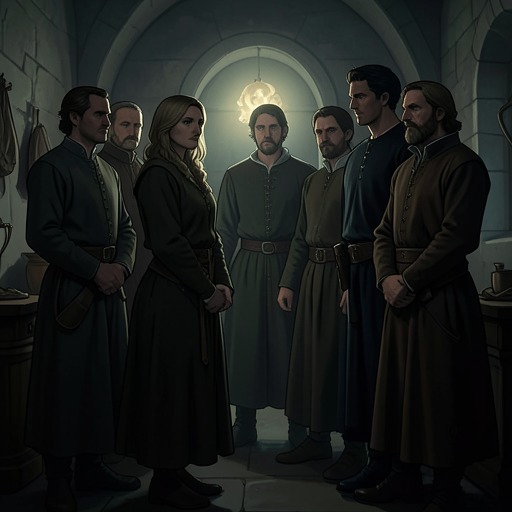
The motorways’ less-traveled spaces can also serve as meeting places. When Baley asks Jessie where her group’s meetings were held, she tells him they gathered in the motorway where they are standing. Its underground location had made it a useful place to meet, although she had been reluctant to return there.
Jessie estimates that the local branch had about sixty or seventy members. The gatherings used folding chairs and refreshments; speakers praised life in the old days and looked toward a future without robots and Spacers. Jessie recalls that the speeches were repetitive and dull, while the social pleasure of gathering and feeling important mattered more. Members pledged themselves to oaths and used secret greetings when they encountered one another outside the meetings. The mundane details establish a local social circle, not by themselves the existence of a coordinated plot.
Baley distinguishes that grassroots level from what he suspects is a smaller, more organized elite. He proposes that the local groups could provide mass support for a possible coup while a separate inner circle pursued a planned program of action. R. Daneel cautions that this interpretation depends on accepting Jessie’s account; Baley says he believes her. The motorway thus becomes a place where an ordinary meeting acquires significance within an investigation into the difference between popular discontent and organized political action.
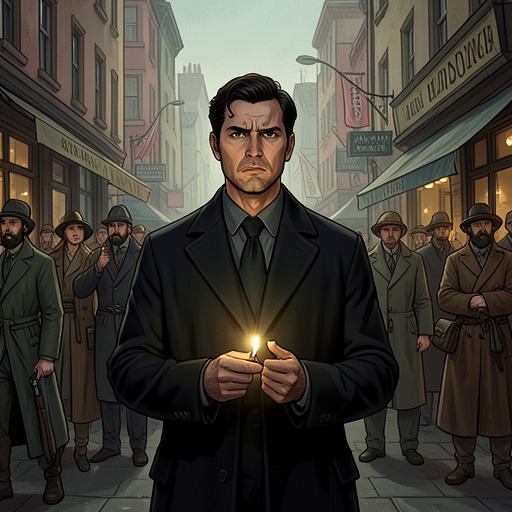
The setting connects that private gathering to the City’s broader hostility toward robots and Spacers. The Medievalist movement grows alongside declassification, as economic displacement deepens frustration. Baley also remembers the Barrier Riots, when he joined a crowd that gathered outside Spacetown’s force barrier for two days, chanting and damaging City property. In a later theory, he argues that the rumor of a robot using a blaster in the City could spread through yeast-vat and hydroponic districts and intensify public fear. Against that expansive political landscape, the motorway meeting offers a local, concrete glimpse of how discontent can take social form—without proving that every gathering is part of a single organized campaign.